Our members

All of our members are dedicated to eradicating poverty in the developing world, yet they come from numerous and diverse backgrounds and professions. Below are some insights into their reasons for taking the Pledge to Give and the impact it has had on their lives.

If you'd like to get in contact with one of our members to talk one to one about what life is like having taken the GWWC pledge then send us an email and we will be happy to get back in touch with you.

 Winds of change in the Horn of Africa
"I decided to take the pledge to give after reading the flawless arguments presented on the GWWC website. Taking the pledge has changed my life for the better, I've never looked back!" - Aled Roberts
 Winds of change in the Horn of Africa
"I always wanted to make a difference to global poverty, but didn't know how. When I heard the ideas behind Giving What We Can, I knew it was the right approach." - Will Crouch, DPhil student at Oxford University and Vice President at GWWC, Oxford
 Winds of change in the Horn of Africa
"I want to do as much good as I can with my time on Earth. Giving What We Can is a great first step." - Holly Morgan, Philosophy Student at Oxford Brookes University
 Winds of change in the Horn of Africa
"It's inspiring to think that we can each save tens or even hundreds of lives just by donating 10% of our income to the most cost-effective charities. Anyone who takes global poverty seriously should join Giving What We Can" - Peter Singer, Professor of Philosophy at Princeton University
 Winds of change in the Horn of Africa
"When I heard about GWWC, the idea of giving ten percent just made sense. I hate the idea spending money on lavish items when someone out there needs it far more." -Yetzenia Leiva, Artist from New Brunswick, New Jersey
 Winds of change in the Horn of Africa
"I joined GWWC to be part of a community of people who were interested in helping other people as effectively as possible. It has worked out really well!" - Nick Becksted
 Winds of change in the Horn of Africa
"GWWC supports the most cost effective global health buy available..... and everyone is awesome :)" - Clare Morris, Masters Student at the London School of Hygiene and Tropical Medicine
 Winds of change in the Horn of Africa
"Joining GWWC has been a great step for me. I’d already been giving 10%, but finding GWWC gave me a framework and support to maintain this commitment long-term." - Stephen Walker, Executive Coach and HR Consultant from Canberra, Austrailia
 Winds of change in the Horn of Africa
"I didn't have a great epiphany about fixing the world -- I just met some people doing something intelligent and simple, and I joined in." - Lyndsey Pickup, Postdoctoral Research Fellow at Reading University
 Winds of change in the Horn of Africa
"Joining Giving What We Can seemed an easy opportunity to make a substantial difference in the world." - Owen, Mathematics Tutor at Oxford University, and Becky Cotton-Barratt, Student at Warwick University
 Winds of change in the Horn of Africa
"It's amazing and pretty humbling to know that by funding the logistics of treating Neglected Tropical Diseases, I can do so much more to alleviate suffering than I can in my work as a doctor." - Bernadette Young, Junior Doctor in Oxfordshire
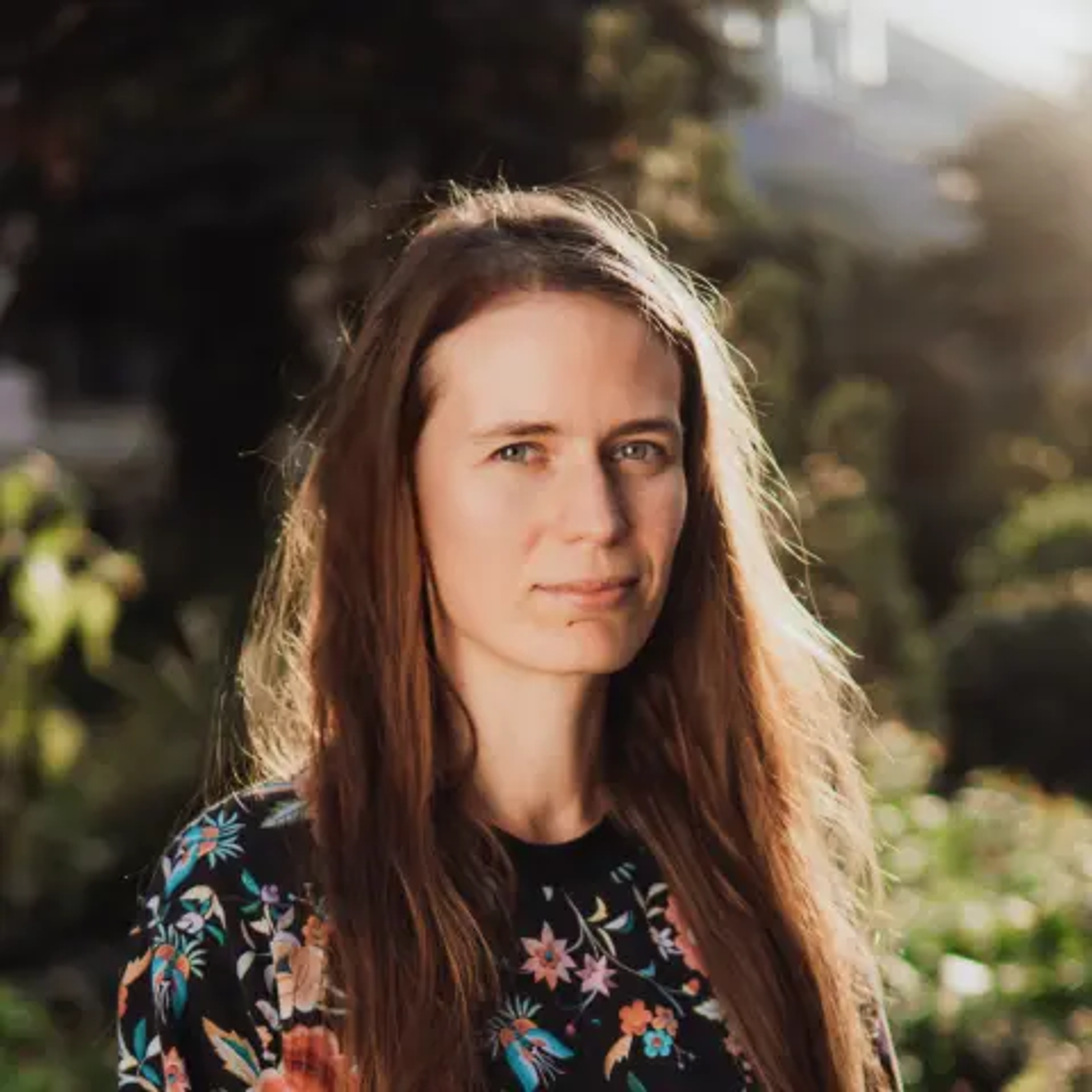
Catriona Mackay

Catriona Mackay is a civil servant, living in London, UK, with her husband and her cat.

‘Since my early teens I've been excited about how much more good you can do by choosing the right charities, but it was only when I discovered Giving What We Can in my mid-thirties that I started giving a substantial proportion of my income.

I'm a civil servant for four days a week, and try to cram far too much into the rest of my time; writing fiction, volunteering for Giving What We Can, learning new things (Hindi, psychology and statistics at the time of writing), reading Shakespeare plays aloud with my friends, playing Bridge, good food, good wine. At first I was concerned that giving 10% would get in the way of some of these things, but I've found that it's easy to have a comfortable and even luxurious lifestyle on 90% of my part-time, public sector salary.

I'm a Christian, albeit a slightly confused and atypical one. Like most or all religious traditions, mine has quite a bit to say in favour of giving. I love the parable of the widow's mite: "As Jesus looked up, he saw the rich putting their gifts into the temple treasury. He also saw a poor widow put in two very small copper coins. ‘Truly I tell you,’ he said, ‘this poor widow has put in more than all the others’ ..."

Whatever the original meaning of this story, the message of Giving What We Can makes it true in a literal way. A small donation to a cost effective charity really can make a bigger difference than a huge donation to an average charity.’

Lee Bishop

Lee Bishop is an administrative assistant at an office in Edinburgh, he is originally from Runcorn.

I started giving to charity when I was still in school. I've always felt a need to help others and charity was my way to do that. I donated some of my Christmas and Birthday money and I gave 10% of any money I earned. At the time, I gave to and fundraised for charities supporting the homeless. When I read an article on Giving What We Can it was a real eye-opener into the effectiveness of donations. I was amazed at the differences between charities. It’s something I had never been told or really thought about. I took the pledge to give and began giving to the most cost-effective charities. I was always going to give, but after reading about Giving What We Can I felt it was also my responsibility to give effectively. I do still donate to less cost-effective charities, but in much smaller quantities and only in addition to my pledge.

There is an illusion that to give significantly to charity you have to make a massive personal sacrifice. I really don't think that's true. My Grandad once told me "It doesn't matter how much money you earn, whether that is 10k a year or 50k a year, you will always have more or less nothing at the end of the month". By donating 10% of my income I can save lives with money I would have squandered on things I don't need. In fact, I don't think there is anything I could spend my pledge money on that would give me the sense of satisfaction or wellbeing that I experience through giving to charity.

Giving a proportion of my income has got me into work on Monday mornings when the prospect of stacking shelves, painting railings or typing letters didn't quite ignite the same passion as saving lives. My income is less than the UK Average, and I donate at least 10% of it, yet I still do all the things I love. I go on nights out with my friends, and I travel down to as many Liverpool matches at Anfield as I possibly can. I'm not a professional philanthropist, though I admire those who are. I could give more than I do, I could cut back more, but I've found a level of giving that I am at peace with. My hope is that Giving What We Can will continue to help people realise that regular cost-effective giving can make a phenomenal difference to those who need it without requiring a complete lifestyle change.

Becky Cotton-Barratt

Becky Cotton-Barratt is a research student in the field of complexity science, studying at Warwick University.

‘Although I don't know what I want to do in the future, it's good to know that I'm doing what I can within my current means to help people.

As a young person and then a student, you get by on little to no income and so making this pledge now, at this stage in my life states very clearly and firmly in my mind that giving is, and will continue to be, a fundamental part of my life. I found living on a student income to be well within my means, so I don't think I'll particularly feel any monetary regret or envy. After all you can't miss what you haven't had!

I was very surprised, and quite shocked, by the difference in efficiency between charities. As part of my research I deal with huge orders of magnitude, but to actually be confronted with such numbers when considering charity efficiency is astounding. I feel very strongly that the work Giving What We Can is doing should be broadcast from every rooftop. People should be able to make easy, informed choices about where they donate money, and Giving What We Can is doing an excellent job in facilitating these decisions.’

Tom Greenway

Tom Greenway is the owner of a small publishing company in Worcester, UK, specializing in art books and magazines.

‘I feel that I am at a great stage in life – with a successful and established company – and was looking for a way to start giving something back. When I read about Toby’s ideas and Giving What We Can in a newspaper article it just made perfect sense, especially when it comes to giving as efficiently as possible.

In setting up a business, ensuring that it runs as efficiently as possible is one of the major keys to success, and so a charity organization that runs on similar principles really appealed to me. Everyone just loves to get the maximum ‘bang for their buck’ and in this instance it’s getting the most good work done for your money, which for me gives twice the satisfaction of giving.

I would also like to donate some of my time in the future to help with marketing and spreading the word. I’m sure there are many more people out there just like me who would also love to be part of such a fantastic project that will in turn affect the lives of so many others.’

Aveek Bhattacharya

Though it might sound naive or selfish, I don’t think it really occurred to me that the plight of the global poor might be my problem before I studied ethics at university. As I thought more about morality, I couldn't escape the conclusion that I ought to do more. Encountering Giving What We Can introduced me to people who struggled with the same issues, who shared similar values, and had a clear idea of how to approach this seemingly intractable problem. It seems to me that the distribution of wealth in the world today involves a double tragedy. On the one hand, the very poorest lack the resources to meet their basic human needs, in terms of food, shelter, medical care and the like. On the other, many of those in the rich world fritter away the money that could improve this situation on things that fail to bring them happiness or fulfilment. GWWC is a movement that draws attention to this situation, and shows us an alternative way. For now, I have resolved to give away 10% of my income as a strategy consultant to the most effective charities, as evaluated by GWWC. In the future I am open to increasing this share and/or entering careers which more directly help the less fortunate.