HIV/AIDS
Giving What We Can no longer conducts our own research into charities and cause areas. Instead, we’re relying on the work of organisations including J-PAL, GiveWell, and the Open Philanthropy Project, which are in a better position to provide more comprehensive research coverage.
These research reports represent our thinking as of late 2016, and much of the information will be relevant for making decisions about how to donate as effectively as possible. However we are not updating them and the information may therefore be out of date.
The human immunodeficiency virus (HIV) infects cells of the human immune system, destroying or impairing their function. In the early stages of infection, no symptoms are apparent. However, as the infection progresses the immune system becomes weaker, and the patient becomes more susceptible to opportunistic infections such as Kaposi’s sarcoma or tuberculosis (TB). As many as 13% of new TB cases are also infected with HIV (WHO factsheet 2011).
The most advanced stage of HIV infection is called acquired immunodeficiency syndrome(AIDS). It can take 10–15 years for an HIV-infected person to develop AIDS; antiretroviral drugs can slow this process down even further.
HIV is transmitted through unprotected sexual intercourse, transfusion of infected blood, sharing of contaminated needles, and mother-to-infant transmission during pregnancy, childbirth and breastfeeding.[1]
According to WHO and UNAIDS estimates, 34.2 million people were living with HIV at the end of 2011. That same year, some 2.5 million people became newly infected, and 1.5 million died of AIDS-related causes. Of these deaths, 230,000 were children.
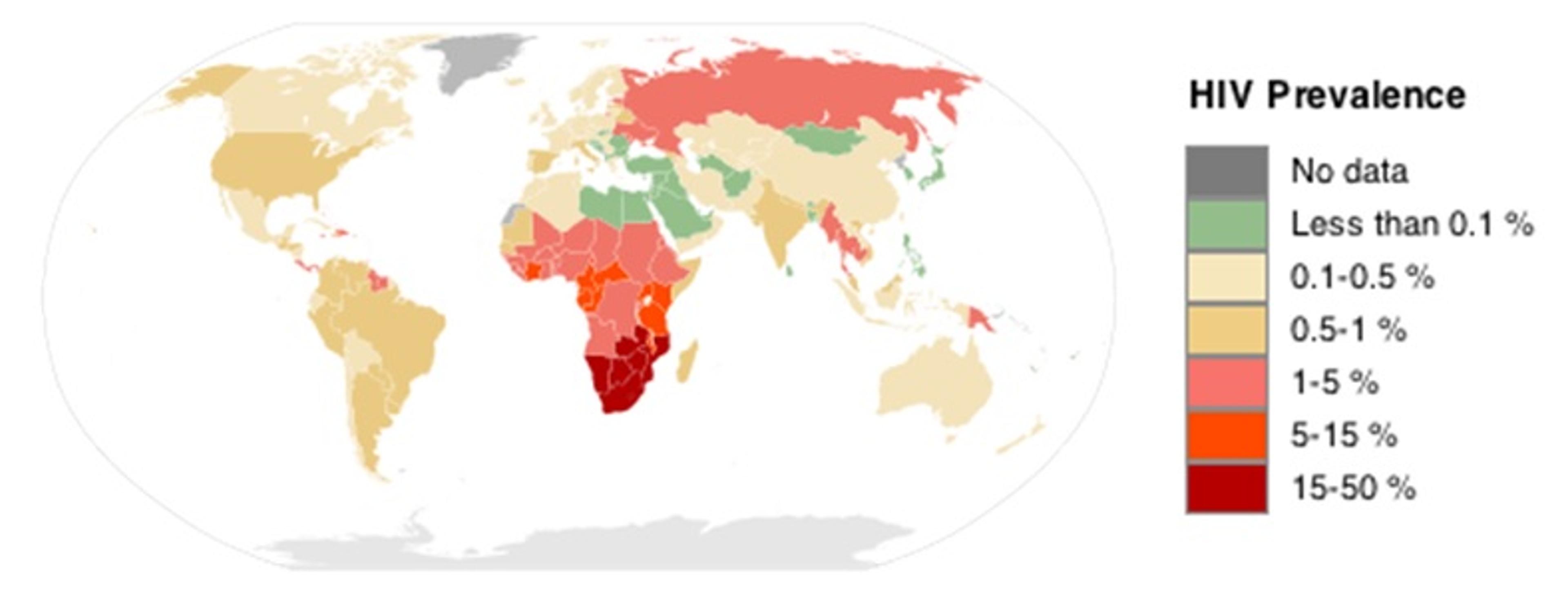
More than two-thirds of HIV infections are in sub-Saharan Africa.[2]
COST-EFFECTIVENESS
Though there is no known cure for HIV, antiretroviral treatment can substantially prolong patients’ lives. Standard antiretroviral therapy (ART) consists of the use of at least three antiretroviral drugs to suppress the HIV virus and stop the progression of the disease.
There are various methods of reducing the rate of HIV transmission, such as education on preventative methods and distributing and promoting condom use. This can be applied both to the general public and to specific groups such as sex workers.
We have been unable to find estimates of cost-effectiveness from the websites of charities that focus on HIV/AIDS. The DCP2 and WHO-CHOICE cost-effectiveness estimates are as follows:
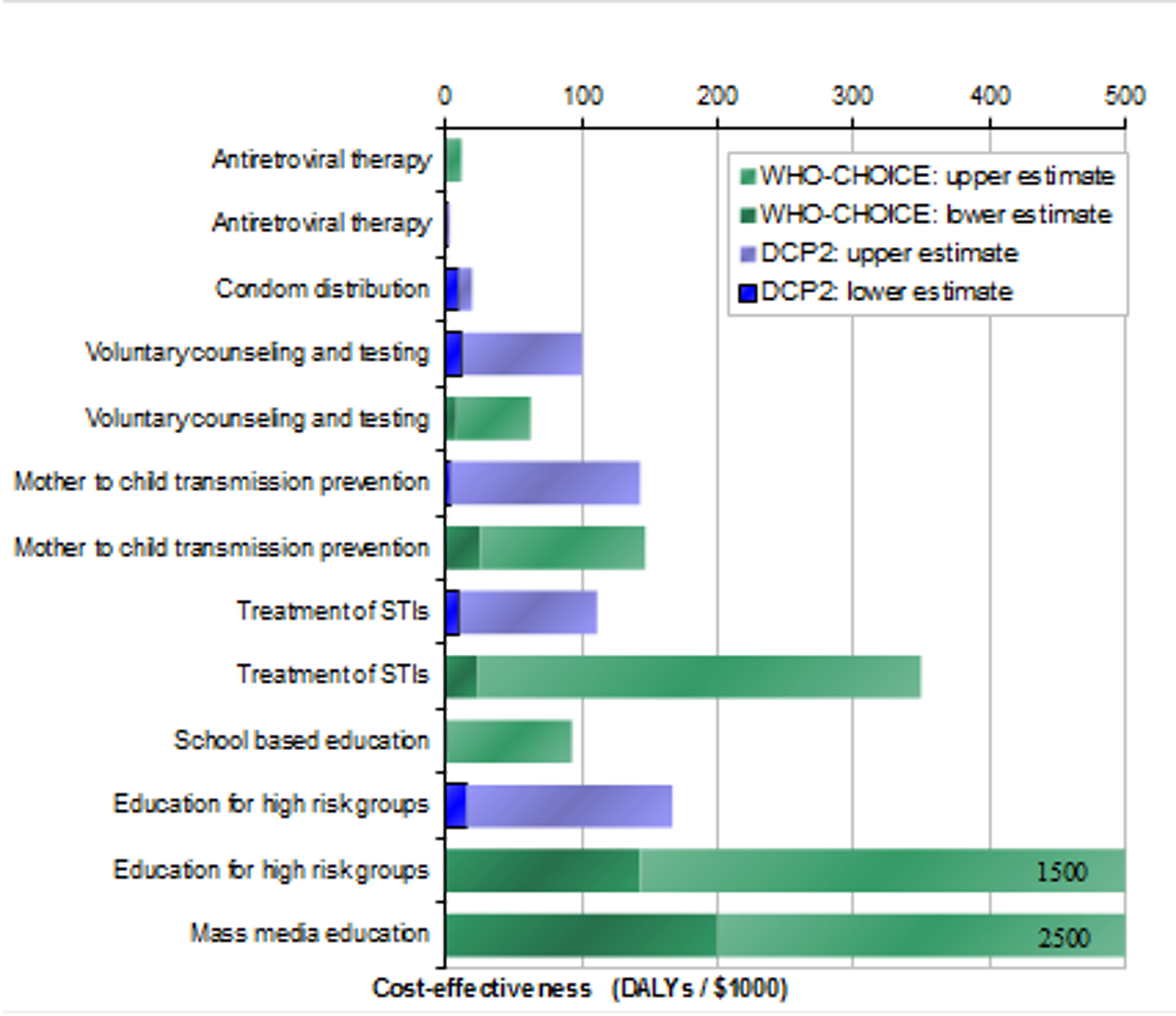
In other words, according to these reports, it would cost $1000 to extend one HIV-sufferer's life for two years through antiretroviral therapy. [3] But the same $1000 could add a total of around 950 years of life to a population if spent on mass media HIV/AIDS education.[4]
The cost-effectiveness estimate for mass media education from WHO-CHOICE is the most favourable we have come across. However, we are unsure how much confidence to place in this figure: while it is plausible that mass media education could be an extremely cost-effective intervention, there is at least some countervailing evidence.[5]
Peer support education for high risk groups is also extremely impressive, but it too should be treated as only a rough estimate.
Other information
Side-effects
Positive side-effects of the treatment and prevention of HIV/AIDS include:
- A decrease in the incidence and transmission of other diseases, such as TB.
- Prevention strategies for HIV/AIDS can also help to prevent other sexually transmitted diseases.
- Reducing the prevalence of HIV/AIDS has far-reaching socioeconomic benefits.
CONCLUSION
Education appears to be the most effective way to reduce the number of people who will suffer and die from HIV/AIDS. While we can't place a great deal of confidence in the WHO-CHOICE figures, if these are correct to within even an order of magnitude then peer education programmes for sex workers and, especially, mass media education, are hugely cost-effective.
Unfortunately, we have been unable so far to find charities that focus on or dedicate a significant amount of their resources to mass media education or education of high-risk groups. We therefore currently have no recommended charities for HIV/AIDS.
Sources:
- WHO summary of HIV/AIDS.
- WHO online Q&A on HIV/AIDS.
- Using a figure of $500 per DALY, with a disability weight for HIV of 0.135.
- Using a figure of $1.25 per DALY, with a disability weight for HIV of 0.135.
- Jane Bertand et al. , 2006. 'Systematic review of the effectiveness of mass communication programs to change HIV/AIDS related behaviours in developing countries', Health Education Research 21:567–97.
Last updated: in or before 2012